


How the donors, the revolving doors, and the San Francisco legal establishment cleared the path for OpenAI
by James Bradley, Photo by Pranjall Kumar
Credit and acknowledgment. This work builds directly on the research and passion of Kevin Halpern (@spearingsharks). His “Rob Bonta Donor Files” and the public-records threads that followed brought these patterns into the open. His determination to follow the filings is what made this deeper examination possible. We are grateful for the light he has already shone.
OCTOBER 26, 2026, COMMENTARY–The political allies and donors of Rob Bonta were fully committed to completing OpenAI’s nonprofit conversion. After the conversion cleared, OpenAI raised $122 billion. Democrats have legalized the transformation of a charity into a for-profit enterprise, and OpenAI hired the most influential people in the orbit of Gavin Newsom and Attorney General Rob Bonta.
Take a sip.
What follows is drawn from public records: FPPC filings, court documents, Attorney General statements, firm announcements, Fauci’s diary, OpenAI’s own disclosures, and contemporaneous reporting. The sequence and the connections are what the documents show.
The Conversion, Then the Money
On October 28, 2025, Attorney General Rob Bonta issued a public statement that his office would not oppose OpenAI’s recapitalization plan. After a year-and-a-half investigation, his office had secured a Memorandum of Understanding that included concessions on charitable assets, safety commitments, and a pledge that the company would remain headquartered in California. The statement and the MOU are public.
A coalition of more than fifty California philanthropic, labor, and nonprofit organizations (reports described the group as roughly sixty) had petitioned Bonta to protect the charitable assets and to condition or halt the conversion until those assets were independently valued and secured for public benefit. Their calls did not result in a court challenge from the Attorney General.
Five months later, on March 31, 2026, OpenAI closed a $122 billion funding round at an $852 billion post-money valuation. The conversion had already cleared approval from Bonta’s office; then the massive capital raise followed. It was the largest in Silicon Valley history, and was anchored by Amazon, Nvidia, and SoftBank.
Bonta, Keker, and the Donor Circle
Rob Bonta’s private-sector legal career began at Keker & Van Nest. From 1999 to 2003 he was a litigation associate at the San Francisco firm. California Secretary of State PowerSearch records show a sustained stream of contributions from partners and employees of Keker, Van Nest & Peters to Bonta’s campaigns and committees. Estimated point to more than $187,000 across roughly 180 contributions. The same firm received a $3.77 million PPP loan in 2020 that was later forgiven.
Keker now represents OpenAI in the consolidated copyright litigation brought by authors, news organizations, and other content creators. Public reporting notes the firm’s role defending OpenAI in multiple related class actions centralized in the Southern District of New York involving the training of large language models on copyrighted works.
Elon Musk: Founder, Early Donor, Outsider
Elon Musk was a co-founder and early major donor of OpenAI when it was a nonprofit research lab. When the organization later restructured and pursued recapitalization, Musk sued in federal court in Oakland, alleging that charitable assets had been diverted and that he had been misled.
Lead defense counsel for OpenAI and Sam Altman included William Savitt of Wachtell, Lipton, Rosen & Katz. Savitt was the same lawyer who, in 2022, represented Twitter and forced Musk to close the acquisition on the original terms. Public accounts of the 2026 Oakland trial describe aggressive cross-examination of Musk and a defense strategy that secured a statute-of-limitations ruling eliminating key claims. The jury ruled in favor of the defense. Musk remained the outsider challenging both the restructuring and the regulatory path that cleared it.
Ann O’Leary: From Newsom’s Chief of Staff to OpenAI
Ann O’Leary served as Governor Gavin Newsom’s first Chief of Staff from late 2018 through December 2020. On March 15, 2020, according to Dr. Anthony Fauci’s diary later released by Senate investigators, she told Fauci that, based on his television appearances, Newsom had decided to close California schools as well as bars and restaurants. She co-chaired the Governor’s Task Force on Business and Jobs Recovery during the lockdown period.
In March 2021 she joined Jenner & Block as a partner and founding leader of the firm’s new San Francisco office, co-chairing its Government Controversies and Public Policy Litigation practice. While still at the firm she acted as counsel for OpenAI on California legislative matters that could affect the restructuring. POLITICO reported in May 2025 on a letter she sent raising questions about a bill and a nonprofit group opposing the conversion.
In January 2026, months after Bonta’s public non-opposition and the executed MOU, Jenner & Block announced that O’Leary was leaving the firm to become OpenAI’s Vice President of Global Policy. The timeline is public record.
The San Francisco Legal Establishment
The same ecosystem appears repeatedly. Keker was Bonta’s private-practice firm, its partners donated heavily to him, and it now defends OpenAI against content creators. Wachtell’s Savitt led the defense that constrained Musk’s claims. Jenner & Block’s O’Leary moved from Newsom’s office to the firm to OpenAI after the Attorney General declined to block the restructuring.
OpenSecrets data show the political contribution patterns of these firms lean overwhelmingly Democratic. Morrison & Foerster’s contributions have run 95–99 percent to Democrats in recent cycles. Jenner & Block’s pattern is similarly lopsided. The Keker circle’s giving to Bonta fits the same picture.
Take a sip.
Voters are entitled to see the pattern: the Attorney General whose private practice was at the firm that now defends OpenAI and whose partners donated heavily to him; the founder and early donor who sued as an outsider and faced the elite firm that had previously forced him to close Twitter; the coalition of more than fifty nonprofits that asked for stronger protection of charitable assets; the former Newsom Chief of Staff—who had coordinated early lockdown decisions with Fauci—who joined OpenAI as its top global policy executive after the deal was cleared; and the $122 billion raise that followed once the conversion was complete.
Is this person fit for office?
Michael Gates is by far the best candidate for Attorney General in the election on Tuesday.
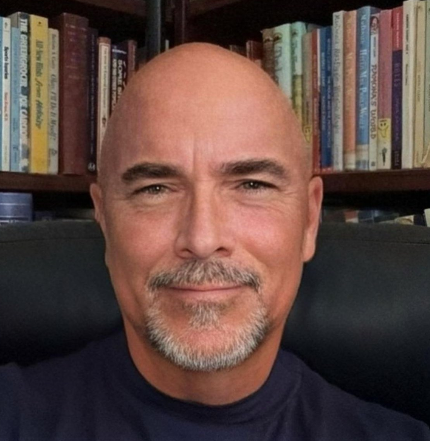
James Bradley is a co-founder of Beni Productions LLC, and an investigative journalist for Uncensored Beat. He is a Coast Guard Veteran, and former candidate for CA US Senate.